Drive Belt Inspection & Routing (A/C, Power Steering, Alternator)
Note: Drive/V-belts must be replaced with new belts once removed — do not reinstall a removed belt past 45,000km (27,962mi).
Flexibility limit inspection
- Use a belt tension gauge as shown. Gauge reading should indicate 25 to 35kgf (55–77 lbf).
- If a belt tensioner gauge is not available, use the millimeter deflection guide below instead.
Alternator belt procedure
- Loosen lock nuts to allow flexibility.
- Inspect belt for fraying or cracking — replace if defects are found.
- Use the deflection chart below to set belt flexibility limits. New belts are set to a flex/travel rate of 7.5–9.0mm (0.295–0.354in).
Belt deflection limits
| Description | New belt | Old (worn) belt | Engine | Notes |
|---|---|---|---|---|
| Alternator V-belt | 7.5–9.00mm (0.295–0.354in) | 11mm (0.433in) | SOHC | Non-power-steering |
| Alternator V-belt | 8.0–10.00mm (0.315–0.394in) | 10.5mm (0.413in) | SOHC-DOHC | Power steering equipped |
| Power steering belt | 13.00–16.5mm (0.512–0.650in) | — | All | — |
| A/C belt | 10.00–11.00mm (0.394–0.433in) | 12.00mm (0.472in) | All | — |
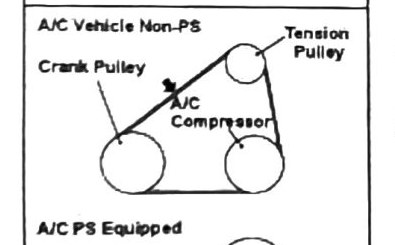
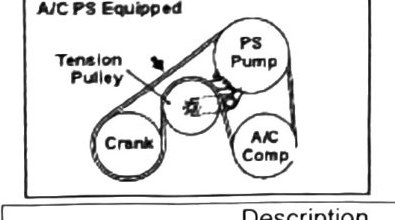
Belt routing
- A/C equipped, no power steering: alternator and A/C compressor belt routing off the crank pulley.
- A/C + power steering equipped: adds a dedicated power steering pump belt/tension pulley to the routing.